
Do You Inadvertently Treat People Like They’re Replaceable?
Most of us would probably answer, “Of course not!”
We’re good people. We care about others. We try to be fair. We want those around us to thrive.
Yet, we’ve inherited a mindset that leads us to inadvertently treat people, including ourselves, as if we’re only as good as our latest visible achievement.
Let’s Test Ourselves
Think about how easily we say variations of these:
“I didn't get enough done today.”
“We need to push to finish on time.”
“I can't take time off right now.”
“We have to do more with less.”
“I made a mistake. I better fix it immediately or should I cover it up?”
None of these statements means we’re bad or wrong, but they reveal assumptions about us that can crowd out respect, creativity and joy at work.
The thought, “I didn't get enough done today,” says something about how we measure time. “We need to push to finish on time” says something about what matters more: the timeline or our limits. “I can't take time off right now” says our work comes before rejuvenation and fun. “We need to do more with less” implies that maximizing efficiency should come at any cost to our lives. “I made a mistake. I better fix it immediately or should I cover it up?” says something about what we believe mistakes reveal about our competence.
We’ve absorbed these thoughts and assumptions through socialization so seamlessly that we may not even realize what we’ve learned.
How Did We Get Here?
Consider how open and curious we tend to be as children.
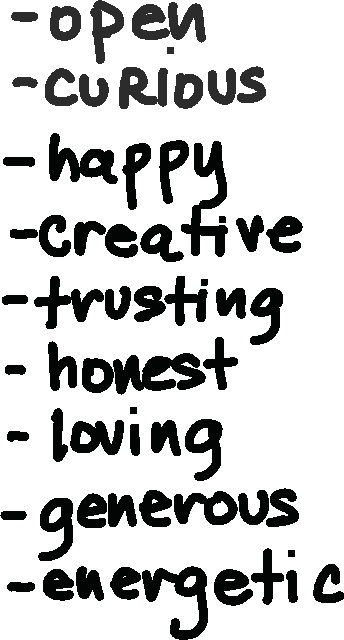
We explore, experiment, make mistakes and absorb enormous amounts of information about ourselves, others and how the world works. We feel our feelings. We’re generous, loving and imaginative.
As we grow, something begins to change.
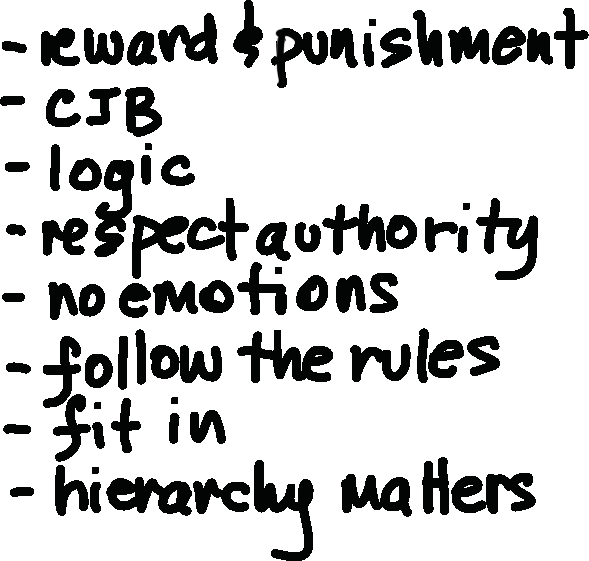
We’re taught to focus increasingly on externals: grades, accolades, social standing and the approval of authority figures. We learn to prioritize logic, downplay emotions, follow the rules, get along with others while competing to get ahead. We learn what gets rewarded or punished; what earns praise and what draws criticism.
Over time, these lessons start to feel like a bargain: we do what’s expected and good things will follow. When they don’t, we question (or blame) ourselves or others, and assume we need to try harder and work longer.
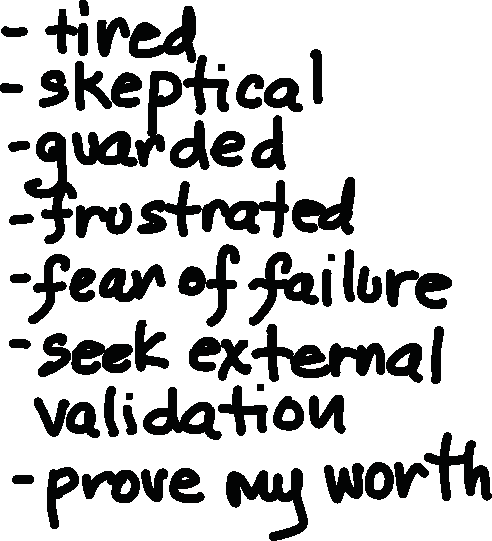
Yet, we don’t lose the human capacities to think, feel, learn, connect, adapt and create, but as adults, we come to fear mistakes and failure. We’re often guarded, worried about being fooled, manipulated or falling behind. We’re often tired or on autopilot, forgetting to live with curiosity and wonder.
Somewhere along the way, what we do and achieve become intertwined with our identity. Before we know it, work can seem like a lifelong stream of proving our worth. And proving it to whom?
Unless we consciously question what we’ve learned, our socialization can drive our entire lives.
In essence, we inherit ways of seeing what it means to be human without realizing it, and continue to think that way even when it creates outcomes we don’t like or intend.
What Happens at Work
Now think about the workplaces you’ve experienced.
What gets rewarded or punished? Who gets promoted? Who’s more important than whom? How does someone get labeled “difficult” or “smart”? What happens when an expensive mistake is made? Can people question those with more authority? What happens to people who don’t produce fast enough or create meaningful results that aren’t visible?
As we’ve learned to see ourselves and others through our utility, we inadvertently reinforce the work structures already in place.
We’ve basically inherited a pressure cooker. We try to tweak it, but haven’t yet questioned or redesigned its underlying structure. We’ll call that the Magnificent Compression Machine:
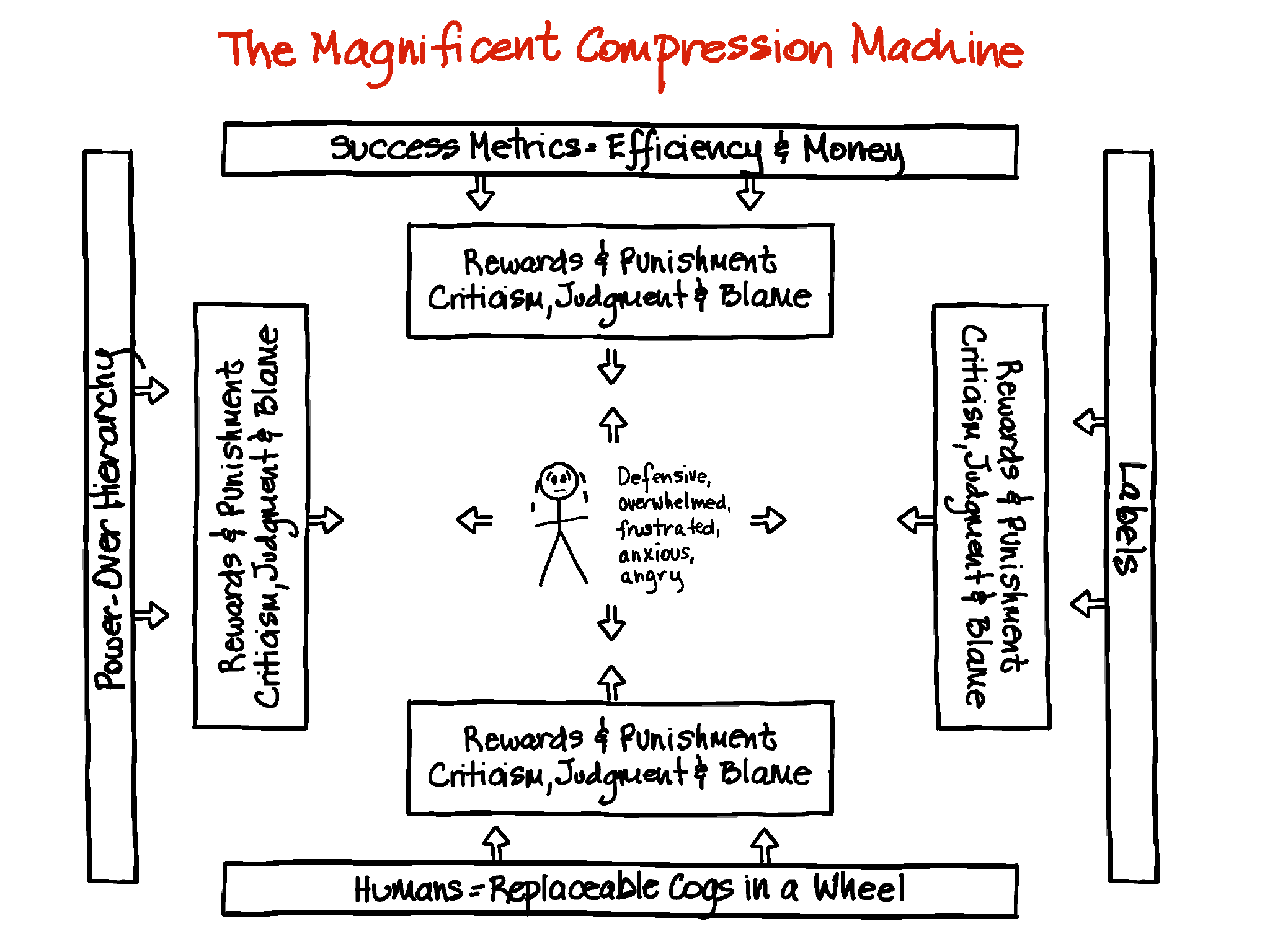
Do you recognize it?
The image reflects the internal architecture of the workplaces we’ve inherited. It’s based on maximizing efficiency and money, using power-over hierarchies and labeling people to indicate where they stand within the existing hierarchy. People are treated as replaceable, while criticism, judgment, blame, rewards and punishments act as the glue that holds everything together.
If this structure looks familiar, you’ll know what tends to happen within it.
We feel stressed, tired and rushed. We tend to react habitually rather than respond deliberately. We work harder. We do our best to look competent even if we’re not the right person for the job. We avoid or hide mistakes and try to please people with greater authority. We collaborate with others but at the same time compete for resources, recognition and promotions. Sometimes we stay quiet when speaking up feels too risky. Sometimes we blow up from the pressure and lose credibility.
Most importantly, we do whatever we can, within our personal (and often differing) moral boundaries, to survive. That puts us in a double bind: protect our jobs and perhaps fail to do what’s needed for the team or mission, or do what’s needed for the team or mission and possibly risk our jobs.
Our adaptations then accumulate. Across workplaces, we see similar patterns: unnecessary friction or conflict, disengagement, frustration, reactive decision-making, inconsistent performance and defensiveness.
With that, we reinforce inherited circumstances that activate self-preservation, then get frustrated with people for their self-protective behavior. Yet that behavior is a symptom of the work environment, not who people are or the totality of how they can behave. If we put the same people in different situations, they’ll likely act differently. Meaning we can intervene by changing the conditions.
We all inherited the Magnificent Compression Machine.
Now, we can all be part of transforming it.
Leaders Who Have Made Different Choices
Some change-makers have found new ways of working that are both inspiring and sustainable.
Take Yvon Chouinard behind Patagonia. He co-founded the company from his love of the outdoors and even changes products when he learns they’re harming Mother Nature. He replaced climbing equipment that damaged rocks and switched clothing to less environmentally harmful materials. Eventually, he went further by designing the company’s ownership structure so profits not reinvested in the company support efforts to protect nature.
Satya Nadella led a transformation at Microsoft. When he became the CEO, he intentionally shifted a culture known for internal competition toward learning, curiosity and collaboration. He describes the change as moving from “know-it-alls” toward “learn-it-alls,” and employees reported greater support for experimentation and ideas outside their formal jobs.
Dan Price founded Gravity Payments. After learning that some employees struggled to afford the basics, he raised the minimum salary to $70,000. Most reactions were positive, but conservative commentators deemed it anti-capitalist, some employees questioned its fairness and some business managers doubted its sustainability. Yet the company’s performance improved substantially.
These leaders show that caring for people and nature can coexist with financially healthy organizations without the need to maximize profits, budgets or funding.
What If We Treated Humans Like Creators?
What changes if we stop seeing ourselves and others as replaceable cogs in a wheel – and instead as creators?
We’d think different thoughts. We’d see problems as something to understand and solve without fault-finding. We’d view timelines as constraints to address rather than reasons to override our human limits. We’d interpret disagreements as opportunities to identify what we might be missing. We’d see mistakes as feedback we can use to learn and generate better outcomes.
The difference isn’t whether we care more or less about results. It’s how we think about ourselves and others while creating them. How we pursue our goals becomes as important as the goals themselves.
What might that look like?
Imagine walking into work knowing you’re needed for the unique mix of knowledge, experience, IQ and EQ you bring to the table, and respected for it.
You could raise concerns, question decisions or disagree with anyone without worrying about repercussions. If someone didn’t understand something you did, they’d ask candidly and respectfully rather than judge, label or make assumptions about you. You could hold firm to your integrity, even under pressure, and acknowledge a mistake without first figuring out how to protect yourself. You’d feel connected to your purpose, fulfilled and free from built-in organizational barriers blocking you. Any energy spent watching your back could instead go toward building on each team member’s ideas to find creative solutions to increasingly complex problems.
Sound idealistic? We’d still misunderstand each other, make mistakes, become defensive and have bad days. Perfect people or blind trust aren’t necessary. The difference is in the environment: does it push us to protect ourselves or free us to contribute our best?
Bringing our entire set of capacities to work requires different conditions from those reinforced within the Magnificent Compression Machine.
What could that be like?
Let’s call the underlying structure the Magnificent Inspiration Society:
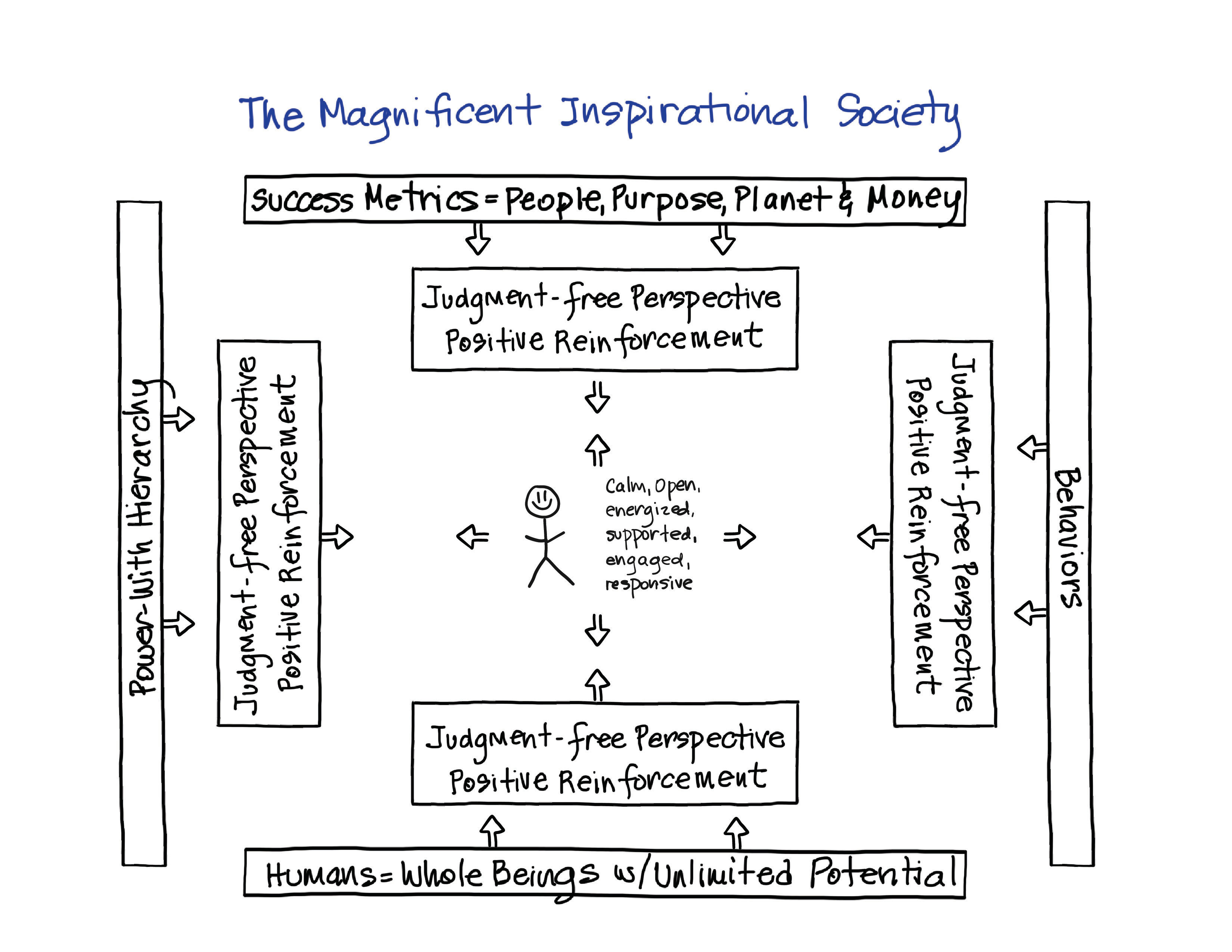
The Magnificent Inspiration Society transforms the work environment by changing the assumptions beneath it.
It’s based on seeing people as inherently valuable and respecting nature as our lifeline. This loosens the need to self-protect and shifts more energy to the work issues at hand. We can respond deliberately rather than react habitually. We broaden how we define success beyond efficiency and money to include how people are doing and how our actions affect nature. We can organize around power-with hierarchies where everyone is equally valued and needed for the mission, acknowledging differing roles and responsibilities. We can use a judgment-free approach, meaning we stay neutral without fault-finding and positively reinforce agreed-upon behaviors. When something goes wrong, we get curious about what contributed to it, including the context and the mindsets we brought to it, before deciding the next steps.
Yet changing the environment doesn’t automatically change the habits we bring. If we’re taught never to question authority, for example, we might remain silent even with a supervisor who genuinely wants to hear our concerns. It’s important to attend to both the environment and our habits.
Over time, how we handle everyday situations can shift. Here are some examples:
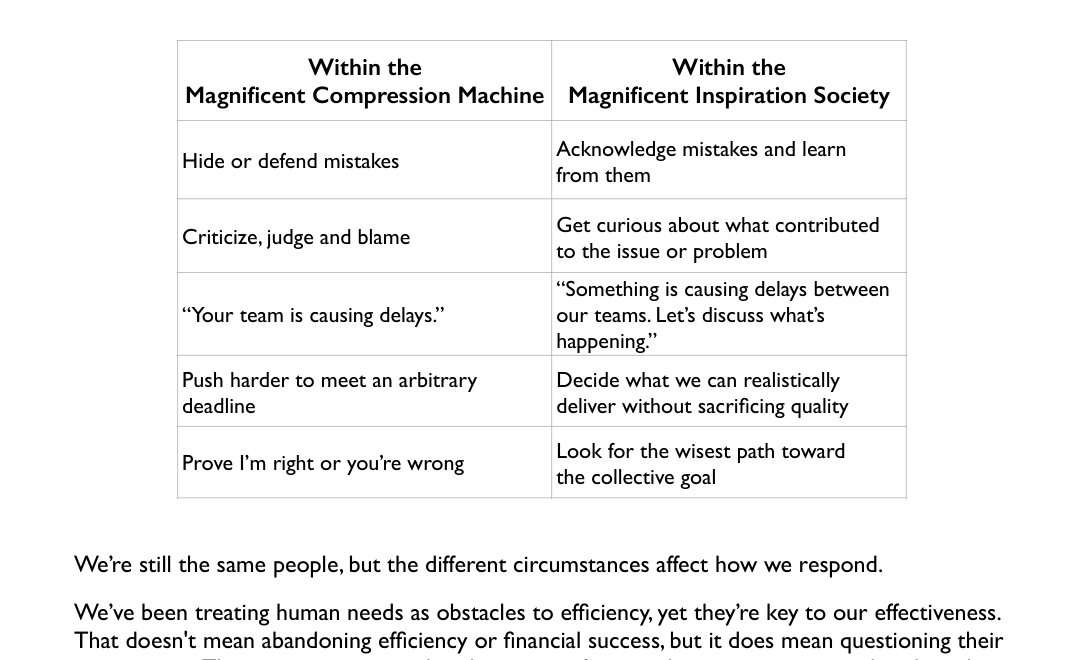
We’re still the same people, but the different circumstances affect how we respond.
We’ve been treating human needs as obstacles to efficiency, yet they’re key to our effectiveness. That doesn't mean abandoning efficiency or financial success, but it does mean questioning their maximization. Their maximization turbo-charges our focus and causes us to override values that enliven us, inadvertently creating wicked problems that come back to haunt us.
We don’t have to make that tradeoff. Creativity, respect, autonomy and joy at work don’t have to come at the expense of organizational success.
We can either retain our inherited workplaces that see us and nature as inputs to production, or design work around what we’re capable of creating in harmony with nature.
It’s not utopia.
It’s a different view of workplaces where three things matter equally: how we show up, how we work together to achieve our goals and mission, and the goals and mission themselves. That means we choose mindsets that reflect our best selves, work together in ways that free our inherent capacities, and pursue meaningful goals without sacrificing what makes us human.
How Could We Each Start Now?
We don’t need to wait for permission, a formal mandate or a leadership title.
We can each start from wherever we are within an existing organizational hierarchy, with the challenges and opportunities already in front of us. We can start by assuming we’re inherently valuable, with nothing to prove about our worth, even though our ideas and decisions will still need to withstand scrutiny.
At the same time, we need a way to systematically unlearn our inherited beliefs and actions while we’re still working within the same structure that reinforces what we want to unlearn.
That’s why Human-Centric Leading was developed.
Human-Centric Leading (HCL) provides a mindset and set of tools that address the core issue of how we see humans and nature. We can use it to question inherited beliefs and practice behaviors that move us toward the Magnificent Inspiration Society. Through HCL, each of us can participate in changing our circumstances by bringing back aspects of our human experience that tend to be misunderstood or excluded within the Magnificent Compression Machine. These include the contextual influences that affect us, the mindsets we bring to each situation, our human needs and emotions, and the new viewpoints that give us access to wisdom.
We can start by bringing one of these lenses into an everyday interaction. Using these questions makes that easy:
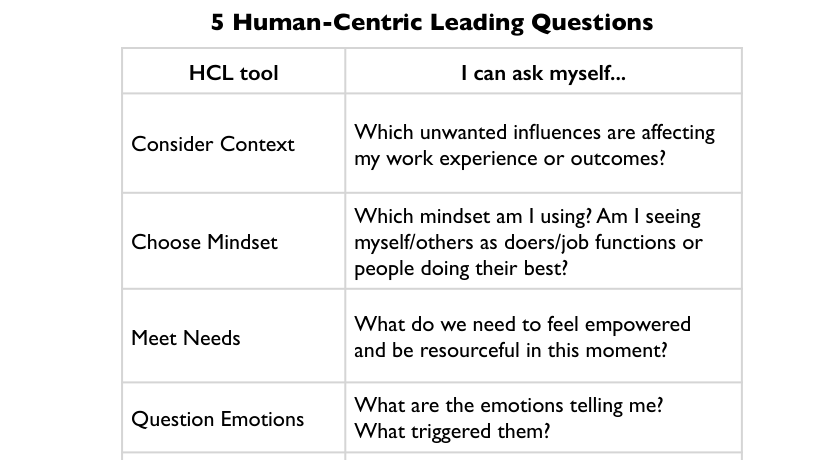
We don’t have to change everything at once. Even one question can interrupt an old habit and enable us to respond deliberately. Over time, those interactions augment how we work together and the conditions we reinforce.
That’s how each of us can begin moving from the Magnificent Compression Machine toward the Magnificent Inspiration Society within our spheres of influence, one interaction at a time.
We may have inherited workplaces that taught us to see ourselves and each other as inputs, but we don’t have to keep reinforcing that. We can begin cultivating environments that recognize what we’ve been all along: inherently valuable human beings with an immense capacity to create and address challenges together.
Explore more: What If Workplace Problems Aren’t People Problems? (#1); Reclaiming Our Humanity in the Workplace, recently published book.
Download the original article (PDF)